
I loved the movie Fame and Irene Cara along with it. She died this past week and I went on a nostalgia bender. I forced my fifteen-year-old daughter to join me at first, blasting “Out Here on My Own” from my phone in my bedroom, singing along with a heartfelt, out-of-tune pathos. Out of the corner of my eye, my husband, who had been walking towards the bedroom, made a face that went from fear to discomfort to horror and did a 180, walking in the opposite direction.
Baby, look at me, and tell me what you see! filled the room next and I was full on dancing with hip moves I’d developed listening to Prince.
Movement, dance, youth: elements celebrated throughout time and limited throughout time by fear (many examples, but let’s stay on theme and go with Footloose as best historical example.). In American lit classes, I remember the word dynamism getting thrown around a lot, from discussing Fordism (assembly line era) and what Whitman meant by the word “electric” in his poetry, as in I Sing the Body Electric, which appeared in Leaves of Grass. Dynamism evokes force and energy, radiation (the good kind).
And there are always the bad guys around dynamism, but in certain celebrations and acts we leave them behind. Celebrate and dance. That’s where I’m at.
Whitman added the word “electric” a decade and half or so after first publication, when the word found more common usage. Youth, dancing, electricity. And we still love those feelings when we’re older, though my fifteen-year-old might be skeptical of that. Winter–its imagery often used to describe older folks, the winter of our lives, approaches in Michigan. Today is especially windy, wintry, and the temperature drops as I type. Many of us move less in Michigan in the winter.
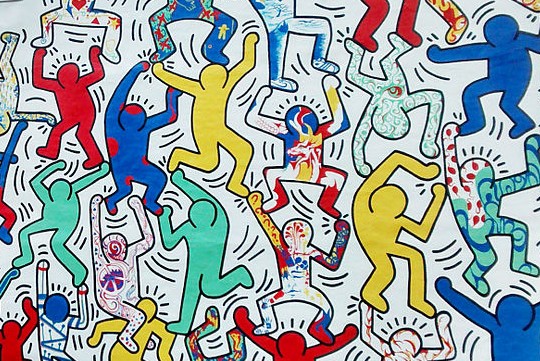
I find a victory in moving and sweating on a cold day, defiant. I went running today and it felt celebratory and basic, leaves of grass coursing through me, even while cold and slow, wearing really awkward color combinations. I let my body dance and gasp for breath. Whitman celebrated the body, all bodies and all functions, including sexual love, pleasure between the same sex, what 1980s writers would call homoerotic, which sounds old fashioned and inadequate, but beautiful, glorious love, defiant for the time he wrote. Keith Haring also celebrated youthful joy in his drawings and energy, movement in little squiggly lines, the joy of dance and basic outlines of who we are amassed, without distinguishing differences.
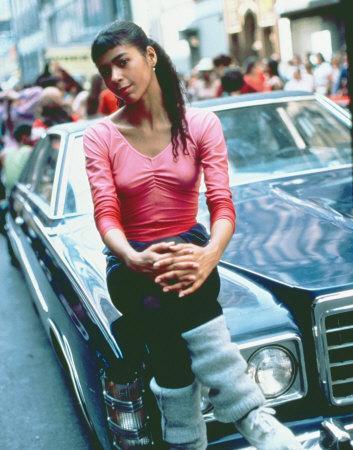
The scene in Fame when they erupt on the NYC streets in dance, on cars, is wonderful, caught near the end of the theme song video. It’s a bit like my favorite song in Rent, La Vie Boheme. Celebratory defiance. It keeps us warm. It’s beautiful. And like the graduation performance in Fame, I Sing the Body Electric, it has all the notes, all the parts–we’re all invited to perform. It’s winter. Turn it up.
In this head the all-baffling brain,
In it and below it the makings of heroes.
Examine these limbs, red, black, or white, they are cunning in tendon and nerve,
They shall be stript that you may see them.
 Casting Threads
Leave a comment